
ZATCA compliant ERP software is about more than the invoice screen. For manufacturers and fabricators, every invoice
is the last step of a job that started with an estimate. Materials, labour, quality checks and deliveries all shape
the final amount. If any step is disconnected, the invoice inherits the error. This article follows one fabrication
job from estimate to tax-ready invoice. It shows where ZATCA compliant ERP software earns its place, and what UAE
manufacturers can learn before their own deadlines.
Key Takeaways
- In fabrication, invoice accuracy depends on the whole job: estimate, materials, production, quality and delivery.
-
ZATCA compliant ERP software connects those steps, so the invoice is built from real job data and can be integrated
with the authority. - Fabrication ERP software that is API ready also helps UAE manufacturers connect to accredited e invoicing solutions.
Why Fabricators Find E-Invoicing Harder
A retailer sells a known item at a known price. A fabricator rarely does. Each job is estimated, priced and produced
to order. Steel, aluminium and consumables are bought and issued against the job. Work moves through cutting, welding,
finishing and inspection. Deliveries may be partial, and invoices may follow milestones.
Each of these steps can change what appears on the invoice. A material substitution changes the cost. A partial
delivery changes the quantity billed. A quality rejection may lead to rework or a credit. When these events live in
separate spreadsheets, finance teams spend days reconciling before they can bill.
Electronic invoicing removes the time to reconcile quietly. In Saudi Arabia, the
ZATCA integration phase
requires the invoicing solution to be integrated with the authority’s systems. Standard tax invoices between
businesses are cleared before they reach the buyer. That leaves little room for manual fixes after the fact.
The same pressure is coming to the UAE. Businesses with revenue of AED 50 million or more must go live with
e-invoicing by 1 January 2027, and smaller businesses by 1 July 2027. For fabricators in either country, the real
question is whether the ERP connects the job to the invoice.
Margins are at stake too. When actual costs are not visible until after billing, underpriced jobs go unnoticed. The
same data that makes an invoice compliant also shows whether the job made money. Fabricators can gain as much from
integration as from compliance itself. Better cost data improves future quotes, highlights wasteful steps and helps
managers decide which kinds of jobs to pursue.
Following One Job From Estimate to Invoice
The flow below shows how a typical fabrication job moves through an integrated ERP. EasyFab ERP, which Upturnist
implements, is described on our site as covering estimation, sales, procurement, inventory, production, quality
control, delivery and finance. Most capable fabrication ERP software follows a similar path.
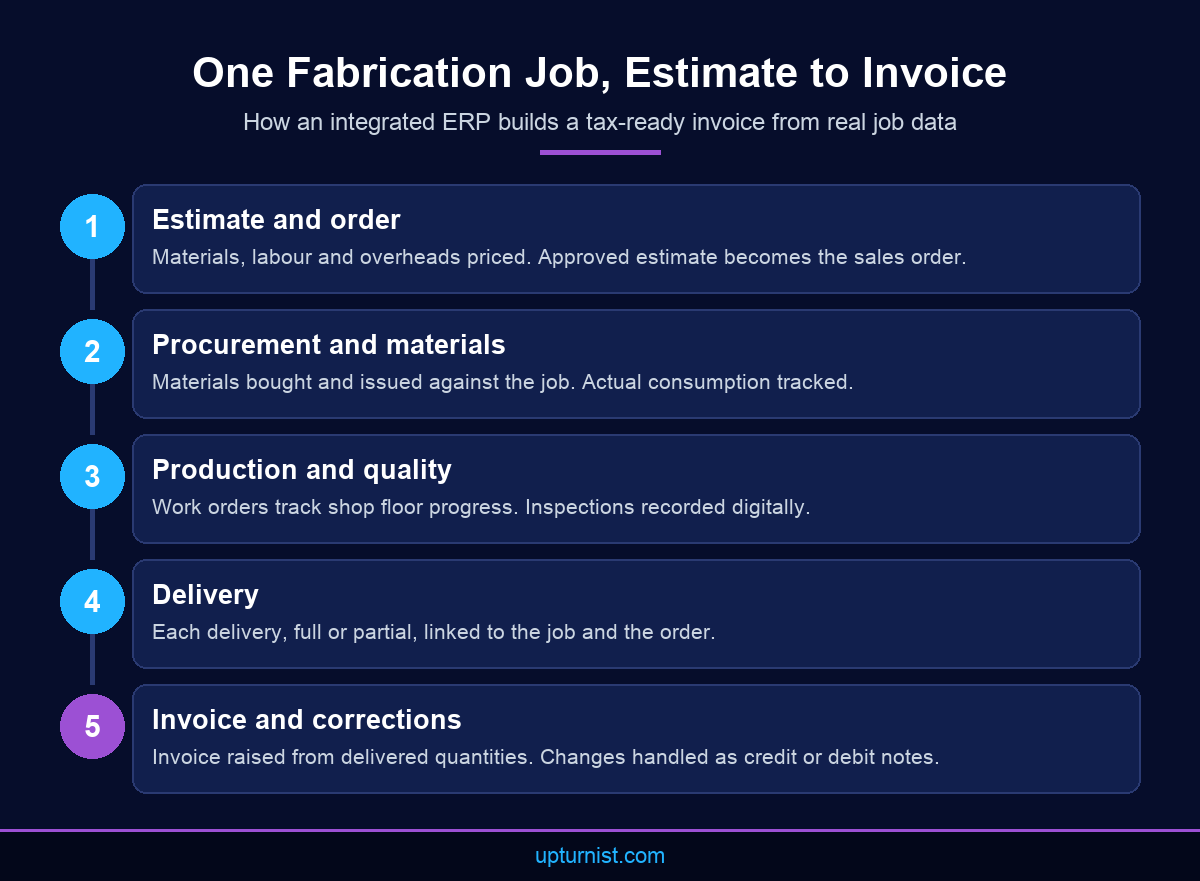
It starts with the estimate. Materials, labour and overheads are priced, and the approved estimate becomes the sales
order. Procurement then buys against the job, and inventory issues materials to it. Each issue is recorded, so actual
material consumption builds up against the original estimate.
Production follows. Work orders track progress on the shop floor, and quality control records inspections. In our UAE
engineering company case study,
digital quality control and live production monitoring gave management a clear view of each job.
Delivery comes next, often in stages. Each delivery note links to the job and the order. Finally, finance raises the
invoice from delivered quantities and agreed prices. Because every earlier step is recorded, the invoice reflects real
work, and corrections follow a controlled credit note process.
Milestone billing adds another layer. Some jobs are invoiced by stage rather than by delivery. In that case, the ERP
should link each milestone invoice to the agreed schedule and to the work completed. Clear links make it easier to
answer customer questions and to issue accurate credit notes if a milestone changes.
What ZATCA Compliant ERP Software Must Do
Compliance needs both good data and a working connection. ZATCA compliant ERP software must hold every required
invoice field as structured data. It must also exchange invoices with the authority’s systems and handle the responses
that come back.
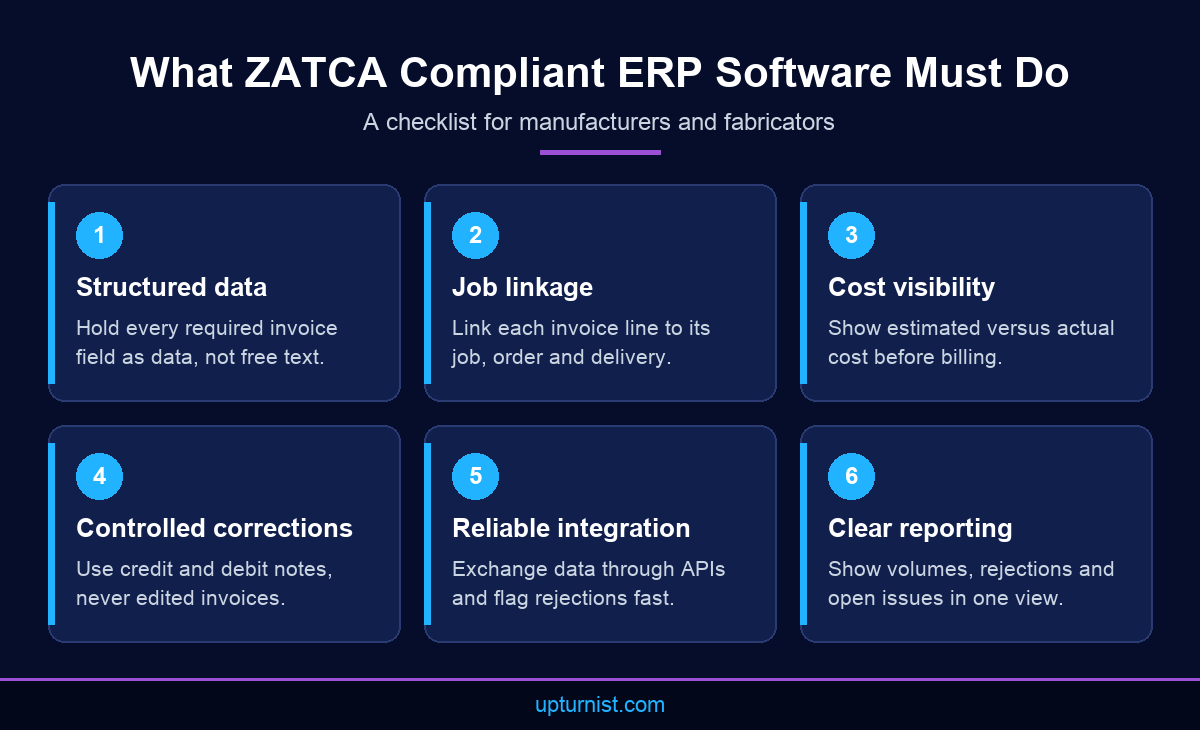
For fabricators, job data is the foundation. The ERP should link each invoice line to the job, order and delivery
behind it. Estimated versus actual cost should be visible, so pricing errors are caught before billing. Customer and
item records should be complete and free of duplicates.
Corrections need control. Rework, returns and price changes should create proper credit or debit notes, not edited
invoices. Integration must be reliable, with rejected invoices flagged to the right person quickly. Finally, reporting
should show volumes, rejections and open issues in one place.
Security and storage matter as well. ZATCA compliant ERP software should control who can issue, approve and correct
invoices. In the UAE, Decision 243 also requires electronic invoice data to be stored within the country. Check these
points early, because changing hosting or access models late in a project is costly.
A
ZATCA compliant ERP rollout for a steel manufacturer
shows this in practice. A Saudi manufacturer moved from disconnected processes to one platform. The published outcomes
include ZATCA compliant ERP operation under Phase 2, API compatibility and full visibility of estimated versus actual
project costs.
Choosing Fabrication ERP Software With E-Invoicing in Mind
If you are selecting or upgrading fabrication ERP software, put e-invoicing on the checklist from day one. Ask vendors
to show a full job, from estimate to invoice, using your own examples. Watch how partial deliveries, material
substitutions and credit notes are handled.
Ask how the system connects to external platforms. In Saudi Arabia, the solution must integrate with ZATCA. In the
UAE, it must exchange data with an Accredited Service Provider. An API ready ERP makes both easier. EasyFab ERP, for
example, is described as API ready and able to integrate with compliant e-invoicing platforms as requirements evolve.
Look beyond compliance as well. The best ZATCA compliant ERP software also improves daily control. Real time cost
tracking, accurate inventory and live production status help you quote better and protect margins. Compliance then
becomes a by product of good operations.
Finally, plan the rollout around your deadline. Clean master data, configure job and tax rules, test with real
invoices, and train your teams. Leave time to fix what testing reveals, because the first test cycle often uncovers
missing data gaps.
Involve the shop floor in the selection. Production supervisors, storekeepers and quality inspectors will record much
of the data that ends up on the invoice. If the ZATCA compliant ERP software is hard for them to use, data quality
will suffer, and compliance will suffer with it.
How Upturnist Helps Manufacturers
Upturnist works with manufacturers, fabricators and engineering firms across the UAE and Saudi Arabia. Our
manufacturing and industrial solutions
connect production, inventory, quality and operations through integrated digital systems.
For e-invoicing, we start with how your jobs really run. We map the flow from estimate to invoice, find the gaps and
fix processes before configuring software. Our UAE e-invoicing readiness work then
prepares your ERP for compliance. We bring
practical experience from ZATCA Phase 2 implementations in Saudi Arabia.
Whether you need ZATCA compliant ERP software for a Saudi entity or a readiness plan for UAE e-invoicing, the goal is
the same. Every invoice should come straight from accurate job data. Check the latest UAE rules on the
Ministry of Finance eInvoicing portal.
Conclusion
For fabricators, compliance starts long before the invoice. ZATCA compliant ERP software connects the estimate,
materials, production, quality and delivery, so every invoice reflects real work. The same foundation prepares UAE
manufacturers for Peppol based e-invoicing from 2027. Choose a system that is integrated, API ready and built around
job based work. If you want to map your own job to invoice flow and find the gaps,
talk to our consultants about your manufacturing operations.
Frequently Asked Questions
What is ZATCA compliant ERP software?
It is ERP software that produces electronic invoices in ZATCA’s required format and integrates with ZATCA’s systems
under the Phase 2 integration rules. For manufacturers, it should also link each invoice to the job data behind it.
Why is e-invoicing harder for fabricators?
Fabrication work is estimated and built to order, with partial deliveries, material changes and milestone billing.
Each event can change the invoice, so disconnected tools make accurate, timely electronic invoices difficult to
produce.
Do fabricators in the UAE need ZATCA compliance?
Only for entities subject to Saudi rules. UAE entities follow the UAE system, which uses Peppol and Accredited Service
Providers. Businesses with revenue of AED 50 million or more must go live by 1 January 2027.
What is EasyFab ERP?
EasyFab ERP is an ERP built specifically for fabrication and manufacturing businesses. It covers estimation, sales,
procurement, inventory, production, quality control, delivery and finance. It is described as API ready, so it can
connect to e-invoicing platforms.
Can an existing fabrication ERP be made compliant?
Sometimes. It depends on whether the system holds structured invoice data, links invoices to jobs and can integrate
through APIs. A readiness assessment shows whether an upgrade, changes or a replacement makes most sense.
How should rework or returns appear on electronic invoices?
Through controlled credit or debit notes linked to the original invoice. Electronic invoicing rules expect corrections
to be made this way rather than by changing an issued invoice. Your ERP should make this easy.
What results did the Saudi steel manufacturer see?
The published outcomes include ZATCA Phase 2 compliance, API compatibility, full visibility of estimated versus actual
costs, better material planning, fewer inventory mismatches and real time monitoring of work orders and production
status across the plant.
How do we choose the right ERP for e-invoicing?
Start from your processes, then compare options by running your own real job examples through each system. Our
technology consulting team helps you evaluate ERP
systems against your operational needs, budget and future growth plans.
Can digital quality checks support compliance?
Yes. Recorded inspections and corrective actions give a clear, auditable trail behind every job and invoice. Our
operational excellence solutions digitise
inspections, quality checks, SOPs and compliance workflows across all your sites and teams.