
SOP development sounds simple. Write down how work is done, share the document and expect people to follow it. Yet
many standard operating procedures end up unread in a shared folder. Good SOP development produces procedures that are
short, clear, owned and kept up to date. This guide explains why SOPs fail, what every SOP needs, how to write one
step by step, and which procedures each department should write first. It is written for growing businesses that want
consistency without heavy paperwork.
Key Takeaways
- Effective SOP development starts with a clear scope, a named owner and steps written for the person doing the work.
-
SOPs reduce dependency on individuals, speed up onboarding and support compliance, but only if they are reviewed and
kept current. - Start with a short list of high risk or high volume processes in each department, then expand.
Why SOPs Matter and Why They Fail
A standard operating procedure is a set of
step by step instructions for carrying out a routine task the same way every time. Without documented processes,
businesses rely on individual knowledge. That leads to inconsistent quality, training challenges and operational risk.
When a key person is on leave or resigns, the know how leaves with them.
Well designed SOPs improve consistency, accountability and business continuity. They help new staff become productive
faster, and they give managers a clear standard to check work against. For regulated activities, they also provide
evidence that a process is controlled.
So why do so many SOPs fail? Usually for a handful of reasons. They are too long, written in technical language, or
describe how work should happen rather than how it really happens. Nobody owns them, so they go out of date. And they
live in folders that people never open during the working day.
Good SOP development fixes each of these problems by design. It keeps documents short, involves the people who do the
work, assigns owners and puts procedures where teams can reach them.
There is also a cultural side. People follow procedures they helped shape and understand. When SOPs arrive from above
without explanation, teams see them as control rather than support. Explaining the purpose of each procedure, and
listening to feedback, turns SOP development into a shared improvement effort rather than an administrative exercise.
The Anatomy of an SOP People Follow
Every useful SOP shares a few core parts. The format can vary, but leaving any of these out weakens the document. Use
the structure below as a template for your SOP development work.
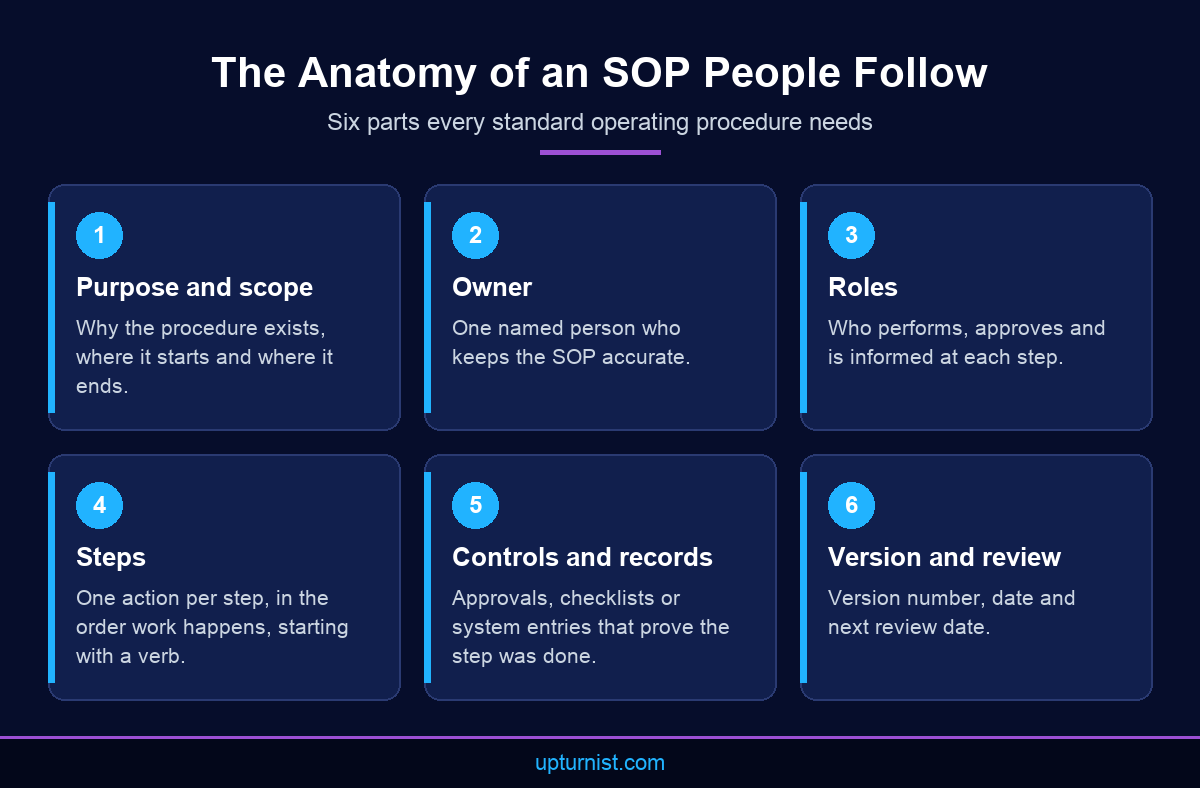
Purpose and scope come first. In two or three sentences, say why the procedure exists, where it starts and where it
ends. Then name the owner, the person responsible for keeping the SOP accurate. Next come the roles: who performs each
step, who approves and who is informed.
The steps are the heart of the SOP. Write them in the order work happens, one action per step, starting with a verb.
Add the controls and records that prove the step was done, such as an approval, a checklist or a system entry.
Finally, record the version, the date and the next review date.
Keep the language plain. Write for the person doing the task, not for an auditor. If a step needs a screenshot or a
photo, include it. If a step depends on judgment, explain the decision rule clearly.
Consider the format as well. Some tasks suit a numbered list. Others work better as a simple flowchart, a checklist or
a short table of decisions. Field teams may prefer a mobile checklist over a document. Choose the format that makes
the next action obvious to the person doing the work.
How to Write an SOP Step by Step
Start by choosing the process. Pick one with clear boundaries, such as approving a supplier invoice or onboarding a
new employee. Large, vague topics like running the warehouse should be broken into smaller procedures first.
Next, observe the work. Sit with the people who do it and note each action, decision and handover. Ask where mistakes
happen and what workarounds they use. This step is where most SOP development projects find their real value, because
it exposes gaps no one had written down.
Then draft and test. Write the first version using the anatomy above. Ask a colleague who has never done the task to
follow it. Every point where they hesitate is a step that needs clearer wording. Revise, then ask the owner and the
approver to sign off.
Finally, publish and train. Put the SOP where people work, explain the changes in a short session and set the first
review date. A procedure that is never trained is rarely followed. Our SOP development service
covers process documentation, department SOPs, digital
SOP management and regular process reviews.
A Department by Department Starter List
Not every process needs an SOP on day one. Start with procedures that carry the most risk, happen most often or depend
on one person’s knowledge. The starter list below suits most growing businesses.
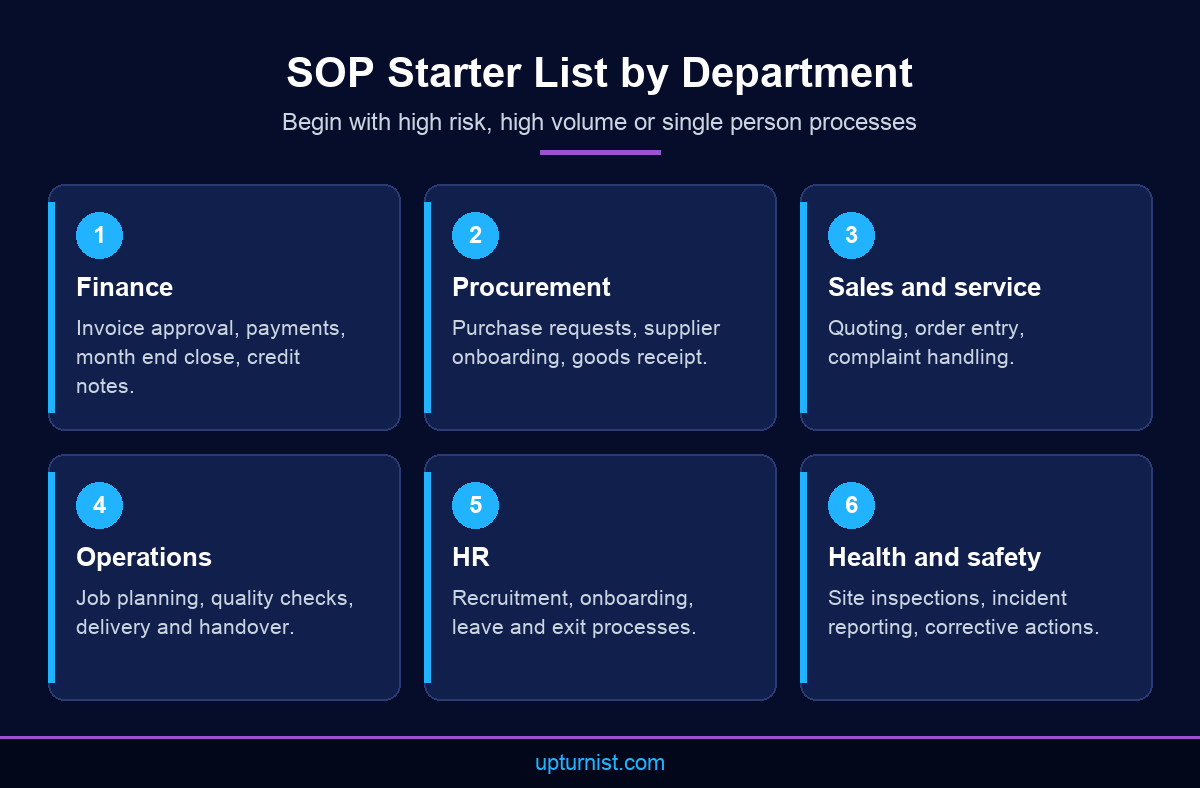
Finance and procurement usually come first, because errors there cost money directly. Invoice approval, payments,
purchase requests and supplier onboarding are common starting points. Sales and customer service follow, with quoting,
order entry and complaint handling.
Operations, HR and safety complete the first round. Field and site teams often benefit most. In our
HSE inspection automation case study,
standardised digital checklists replaced paper across a fuel distribution network. Inspections became consistent
across all stations.
New businesses can build SOPs from the start. Our
business setup consulting includes organisation
structure and SOP planning, so procedures are defined before habits form.
Keep the first round small. Five to ten well written SOPs that people use are worth more than fifty that sit unread.
Once the first set is working, review what helped and what did not, then extend the same SOP development approach to
the next group of processes.
Keeping SOPs Alive: Digital Management and Reviews
An SOP is only useful while it matches reality. Processes change when systems, regulations or teams change. Without a
review cycle, documents drift until people stop trusting them.
Digital SOP management helps. Storing procedures in a controlled system gives version control, controlled access and a
clear history of changes. Teams always see the current version. Managers can see who approved what and when. Our
operational excellence solutions include SOP
digitalisation alongside inspection and compliance automation.
Set review dates based on risk. High risk procedures might be reviewed every six months, others yearly, and any
procedure after a major change. Treat reviews as continuous improvement, not paperwork. Ask users what is unclear and
what has changed.
Measure whether SOPs are working. Look at error rates, rework, audit findings and onboarding time before and after a
procedure is introduced. If nothing changes, the SOP may not be followed, or it may describe the wrong process. Either
way, the data tells you where to look next. Small, regular fixes keep every procedure useful.
Some businesses run SOP development in house. Others bring in SOP consulting support, especially when they are growing
fast or preparing for audits. An SOP development partner for growing businesses brings structure, a tested template
and an outside view of where processes break. Our
business transformation team links SOPs to wider
process improvement, so documentation and better ways of working move together.
Conclusion
SOP development works when procedures are short, owned and written for the people who use them. Start with clear
scope, a named owner and steps in the order work happens. Test each draft with someone new to the task, then train and
review it regularly. Begin with high risk processes in each department and build from there. If you want structured
help documenting and improving your processes,
talk to our consultants about practical SOPs that teams actually
follow.
Frequently Asked Questions
What is SOP development?
SOP development is the process of documenting how routine tasks should be done, step by step. It covers scoping the
process, observing the work, drafting, testing, approving, training and reviewing standard operating procedures over
time.
Why do businesses need SOPs?
SOPs reduce dependency on individuals and keep quality consistent. They speed up onboarding, support compliance and
protect business continuity when key people are unavailable. They also give managers a clear standard to review work
against.
How long should an SOP be?
As short as possible while still complete. Many procedures fit on one or two pages. If an SOP grows much longer,
consider splitting it into smaller procedures with clear handovers between them, so each one stays easy to use.
Who should write SOPs?
The people who do the work should help write them, with a process owner responsible for accuracy. A facilitator or
consultant can bring structure, but staff knowledge makes the procedure realistic and usable.
How often should SOPs be reviewed?
Base the cycle on risk. High risk procedures might be reviewed every six months and others once a year. Any SOP should
also be reviewed after a major change to systems, regulations or team structure.
What is digital SOP management?
It means storing procedures in a controlled digital system with version control and controlled access. Teams see the
current version, changes are tracked, and managers can see who approved each update and when.
What does an SOP development consultancy firm do?
It helps document processes, design department SOPs, set up digital SOP management and run reviews. Upturnist develops
practical SOPs that are easy to follow, easy to maintain and aligned with how your business operates.
Can SOPs support ISO and quality compliance?
Yes. Documented procedures and digital records support audits. Our
quality and ISO compliance case study
shows how digital checklists aligned with ISO requirements standardised quality inspections and sped up audit
preparation across multiple sites.
Should SOPs come before new software?
Usually yes. Clear processes make software projects simpler and cheaper. Our
business consulting work follows a business first
approach: understand operations, improve processes, then implement technology. Clear processes reduce rework during
any later software project.